Start where your work starts.
An engineer wants the tolerances. Procurement wants the paperwork. A program lead wants to see it in a device. Pick your door — each one goes straight to the answer.

Design past the tool
Understand RIPL tolerances, feature sizes, and how micro parts behave at production scale — before you compromise the geometry.

Supplier basics
Lead times (~24 h quote, 2–4 week delivery), capacity from 1 to 100,000+ parts, ISO 13485, material datasheets and the supplier documentation an approval workflow asks for.

See it in a device
Where RIPL parts already work inside robot-assisted surgical systems and interventional devices — and where they fit your device.
Devices keep getting smaller. The metal parts inside them have to keep up.
Robot-assisted surgery and catheter-based intervention are where that pressure is greatest — and where RIPL parts are produced today.
Robot-Assisted Surgical Solutions
The constraint: Articulating systems demand precise motion from compact, complex assemblies — geometries that fracture sub-0.25 mm CNC tools.
What RIPL changes: Instrument, end-effector, joint, and structural components, each printed as a single net-shape part with the internal features the mechanism actually needs.
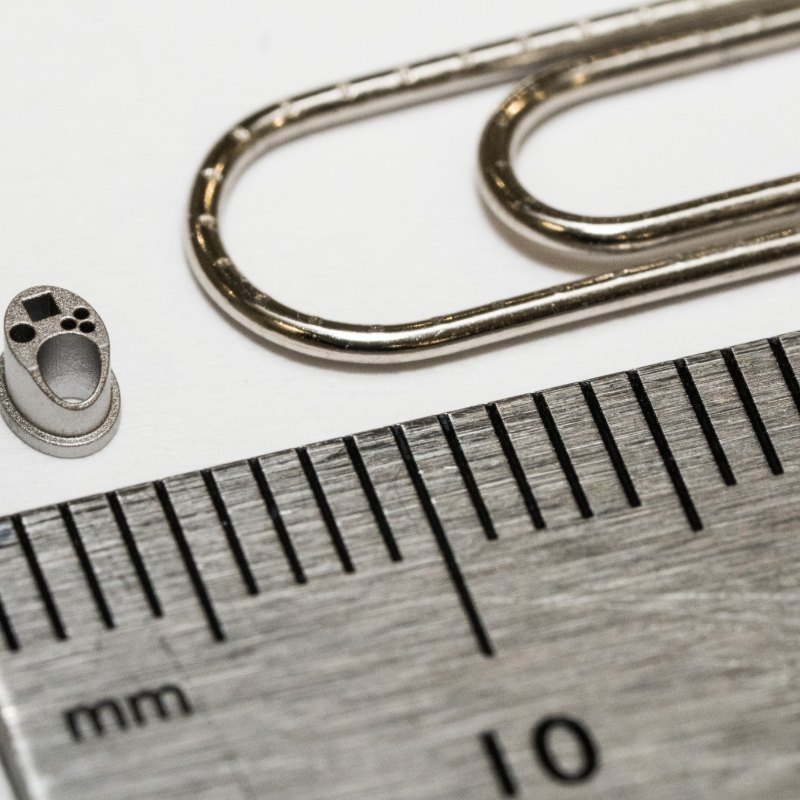
Interventional Device Solutions
The constraint: Catheter-based systems shrink the envelope while the functional demands keep growing.
What RIPL changes: Electrodes, tips, housings, and delivery-system components with thin walls and enclosed channels that fit constrained internal pathways.
Parts, at scale
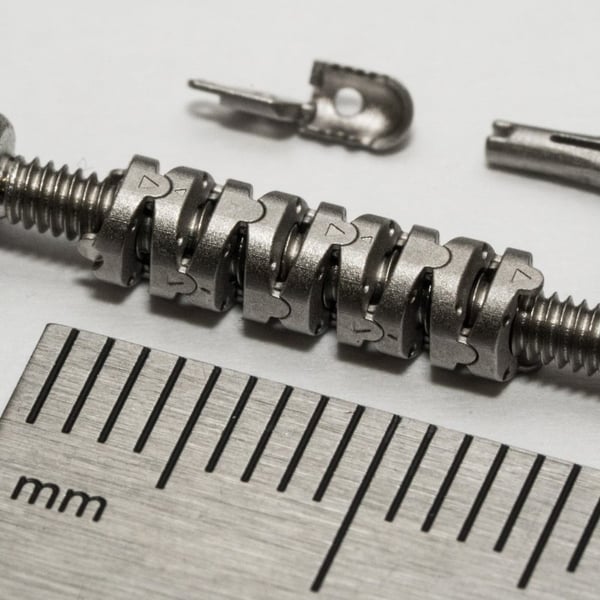
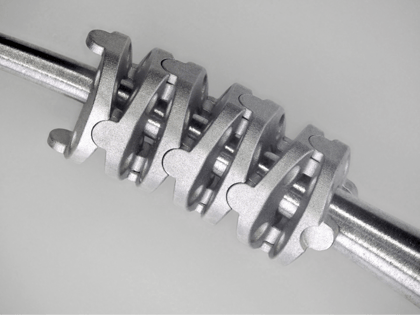
Lattice screw, on the millimetre rule
Stainless steel · articulating links · mm rule for scale
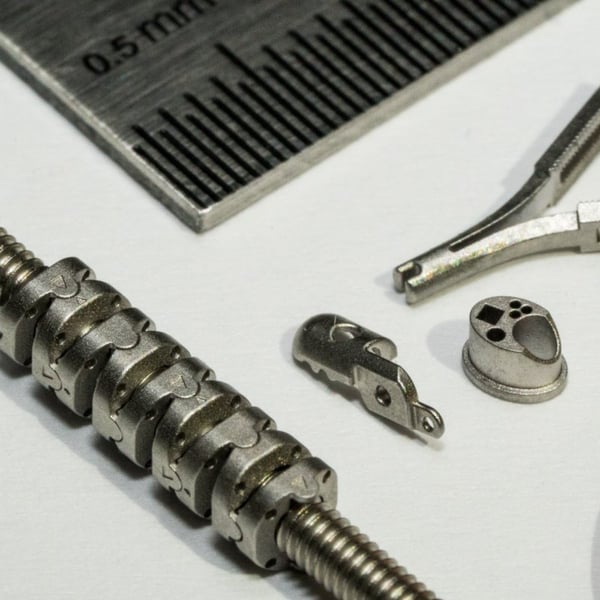
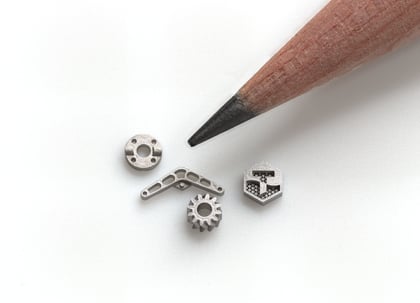
Five-part family
Stainless steel · five geometries, one process
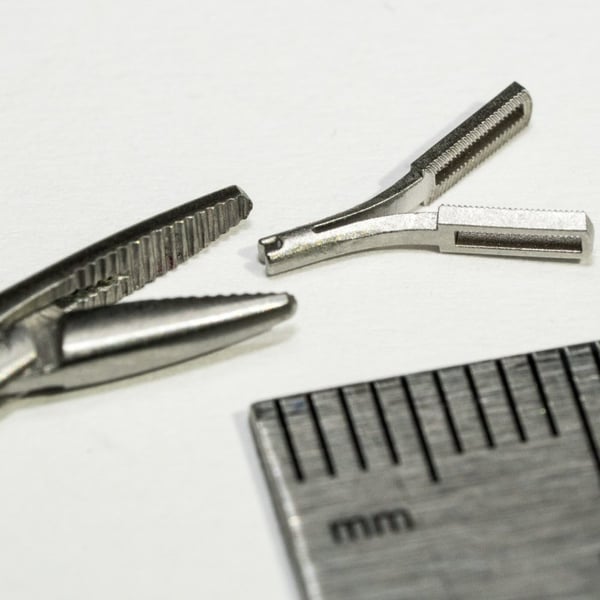
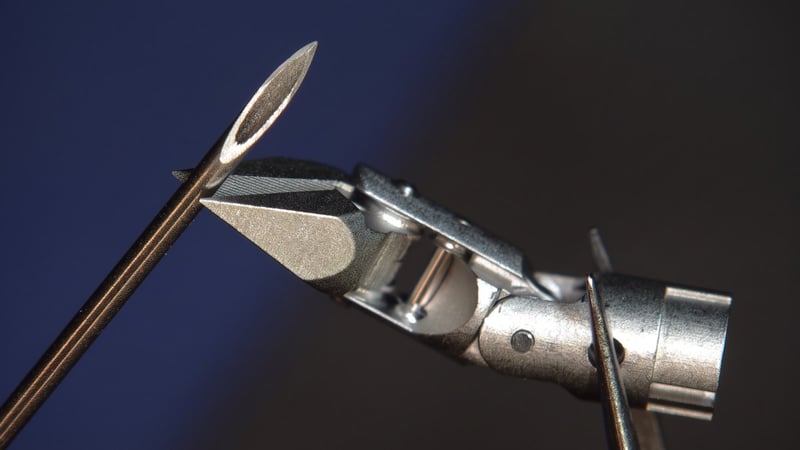
Serrated micro jaw, beside a hemostat
Stainless steel · as printed · hemostat and mm rule for scale
Short reads on designing parts under 5 mm
Written by the engineers who run the process.