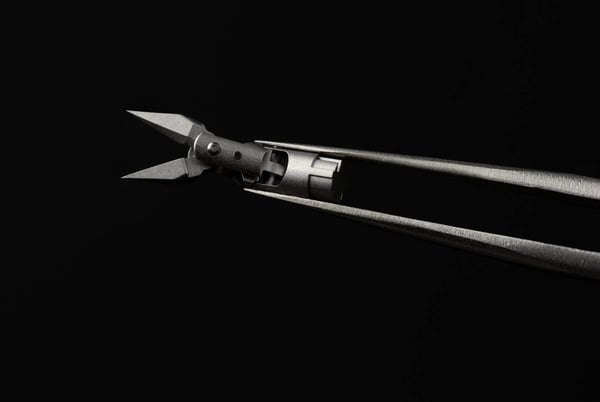
Devices keep getting smaller. The metal parts inside them have to keep up.
As devices move into smaller anatomy, robot-assisted and interventional platforms are where RIPL parts do the most work today — the frontier of what's manufacturable, produced with repeatable quality at production scale.
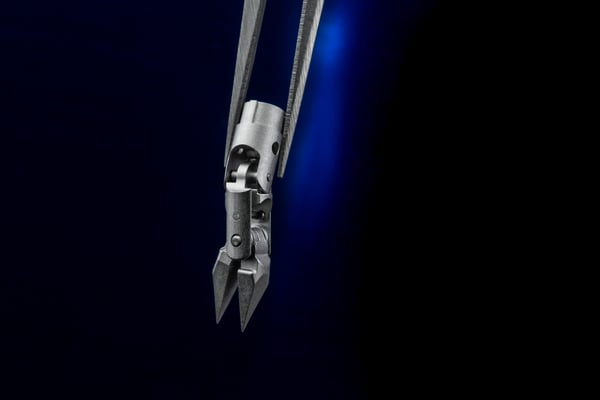
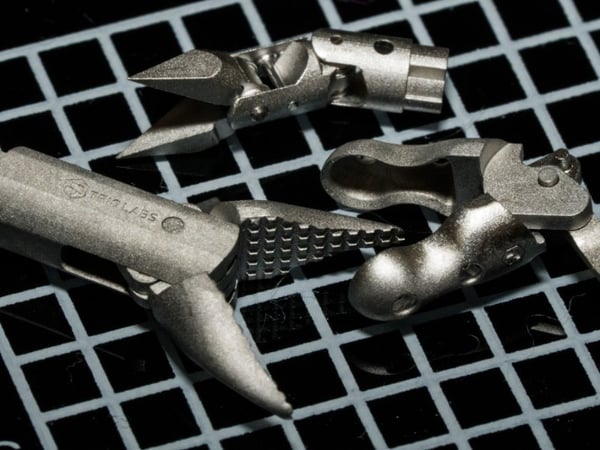
Robot-Assisted Surgical Solutions
The constraint: robots navigating flexible instruments need distal mechanical architecture at millimeter scale — articulating links, wrists, jaws — where machined assemblies run out of room.
What RIPL changes: net-shape links and wrist components — each a single part with its internal tendon paths — no tooling, iterated in weeks.
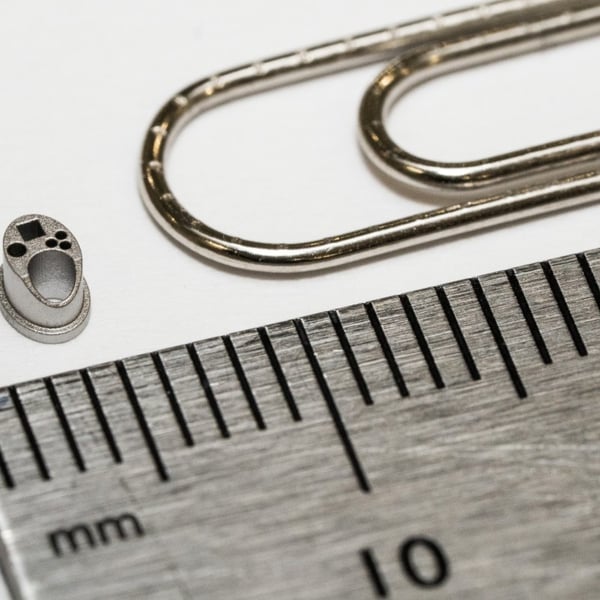
Interventional Device Solutions
The constraint: the device is the catheter — and each micro-component at the distal end is a manufacturing bottleneck.
What RIPL changes: electrodes, tips, and delivery components as single net-shape parts — burr-free, with internal geometry machining can't reach.
Robot-assisted platforms are spreading across clinical areas.
Robotic bronchoscopy, robotic stroke thrombectomy, robotic structural-heart repair — where a robot navigates a flexible instrument, the distal architecture is RIPL territory.


A complete articulated grasper system, from CAD review to parts in hand