
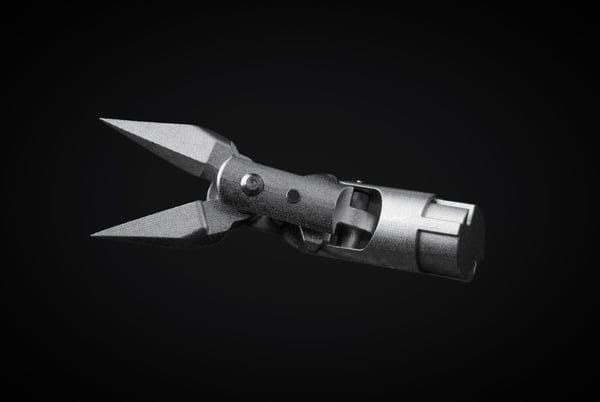
Wristed instrument, in profile
Stainless steel · robot-assisted
The distal assembly on its side, showing how the collar, wrist and jaw nest along one axis. The slot in the collar and the clearance around the clevis are printed, not cut — internal features at the scale where machining runs out of tool.
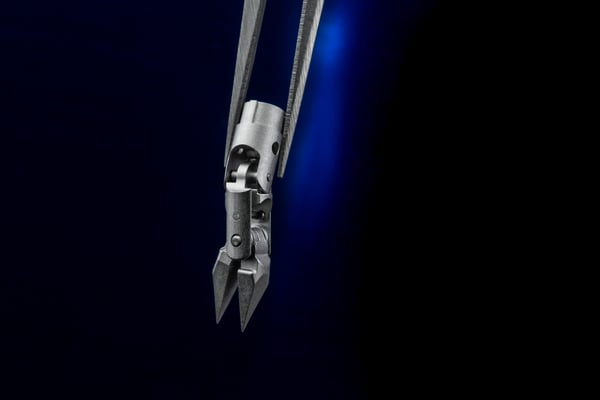
Wristed instrument, closed
Stainless steel · robot-assisted
Shaft collar, wrist clevis, jaw links and blades in a stack no wider than the tweezer tips holding it. The wall sections and pin bores an articulating instrument depends on come from the same process whether the order is 1 part or 100,000+.
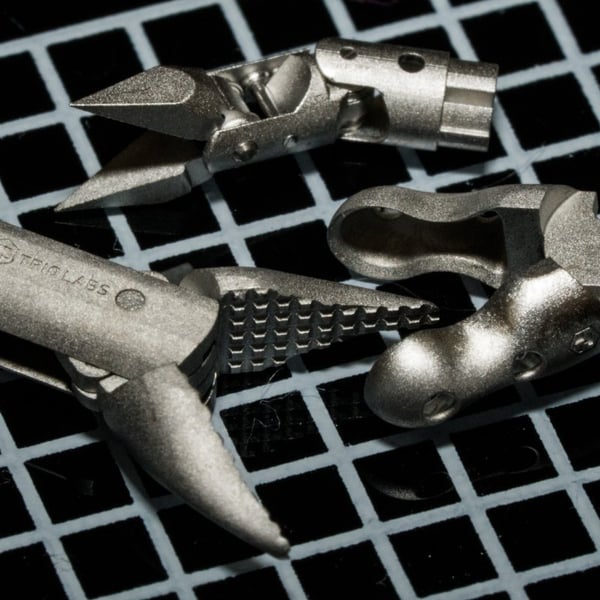
Grasper, jaw and wrist parts
Stainless steel · robot-assisted
The parts of an articulated grasper laid out before assembly: shaft, serrated jaw, wrist link and clevis. Each is a single net-shape part; the serrations and the pin bores are printed in position.
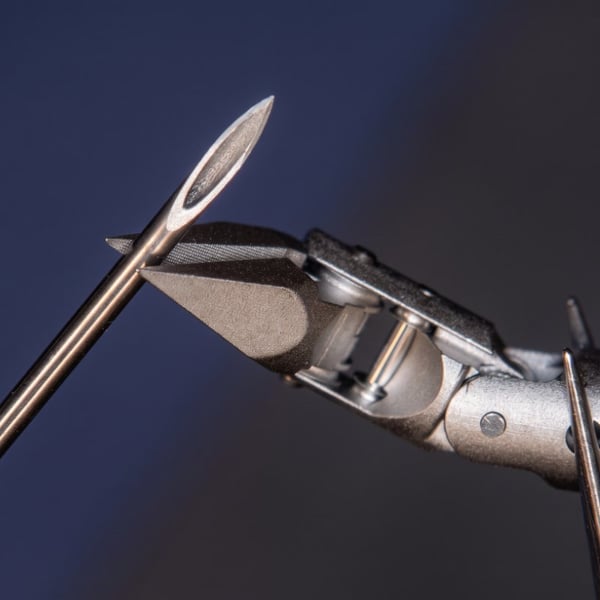
Articulated grasper beside a needle
Stainless steel · robot-assisted
The assembled grasper next to a standard hypodermic needle, at 20× magnification. The needle is the scale reference — the jaw, wrist and shaft together are a few millimetres long.
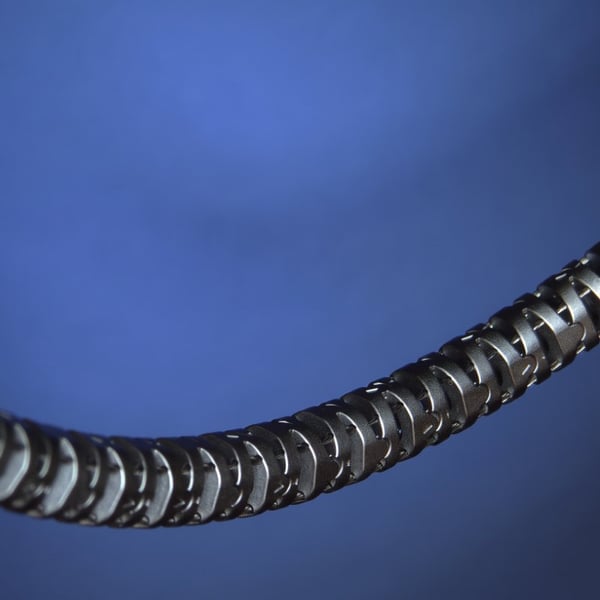
Snake-joint stack
Stainless steel · interventional
Interlocking articulation links on a tendon core, at 10×. Each link is one part with its own pivot features and tendon paths; the stack bends as a continuous curve.
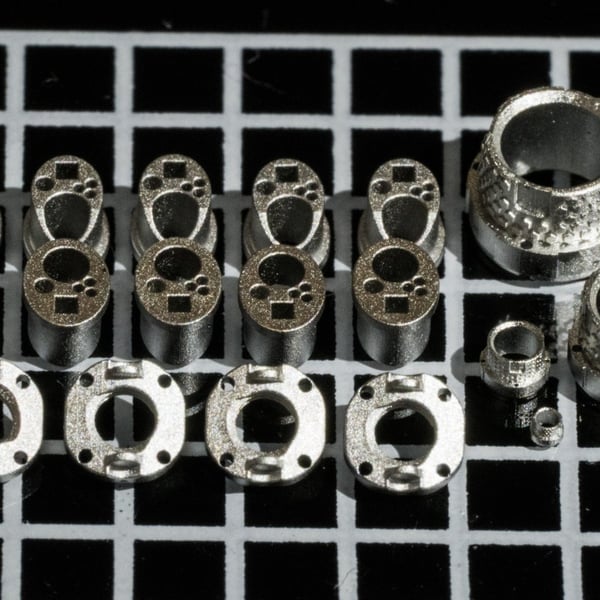
Multi-lumen tips, rings and flanges
Stainless steel · interventional
A tray of finished interventional components: multi-lumen tips with a square keyway and four fine passages, textured rings and flanged collars. One build, several part classes, each ready for assembly.
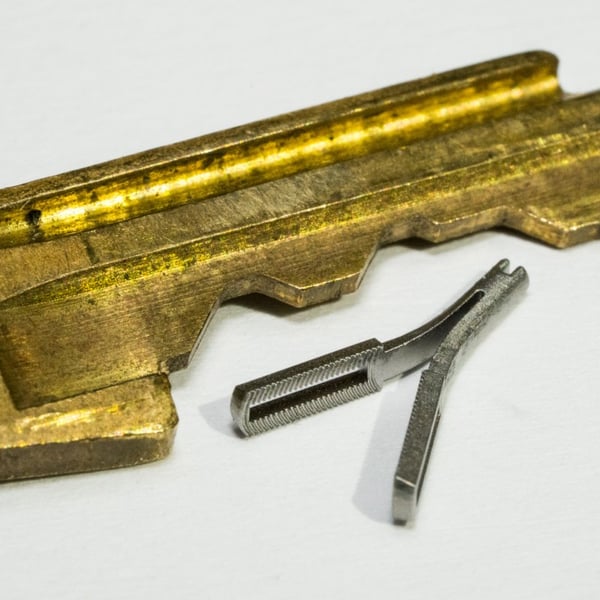
Serrated micro jaw
Stainless steel · interventional
A serrated Y-shaped jaw beside a brass key. The serrations run the full length of the jaw face and the hinge bosses are printed in position — no secondary cutting.
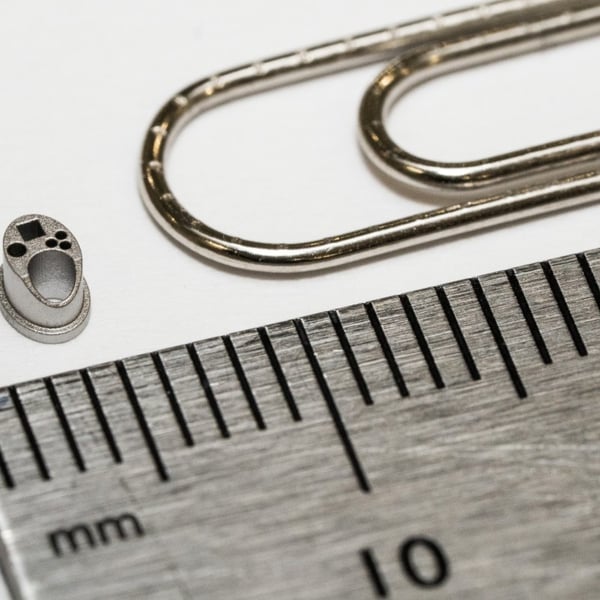
Multi-lumen catheter tip
Stainless steel · interventional
One large central lumen, a square keyway and four fine round passages through a face about two millimetres across, beside a millimetre rule. Enclosed channels like these are the interventional case for RIPL.
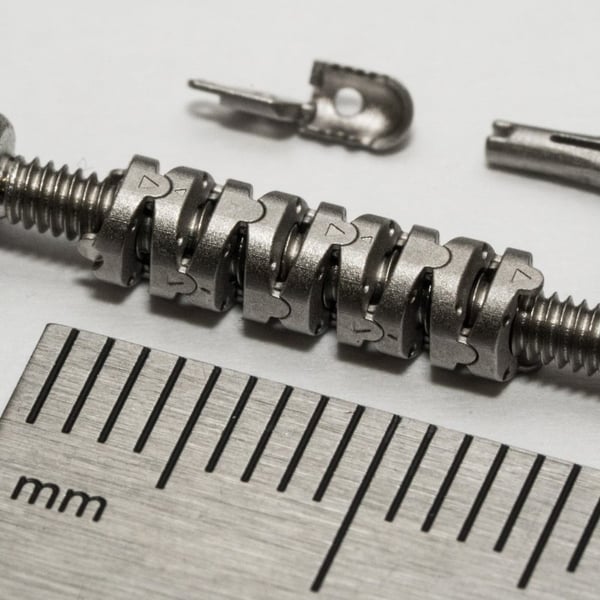
Lattice screw, clevis and jaw
Stainless steel · micro component
A lattice-link screw against a millimetre rule, with a clevis and a jaw half beside it. The lattice links thread along the screw body and articulate as a chain.
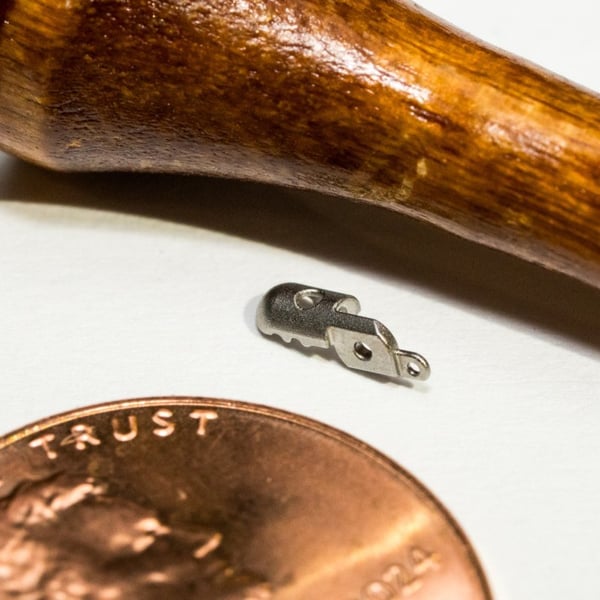
Clevis with pivot bores
Stainless steel · micro component
A clevis a few millimetres long beside a penny: two pivot bores, a tang with a tapped hole and a serrated nose. The bores are printed in position, ready to pin.
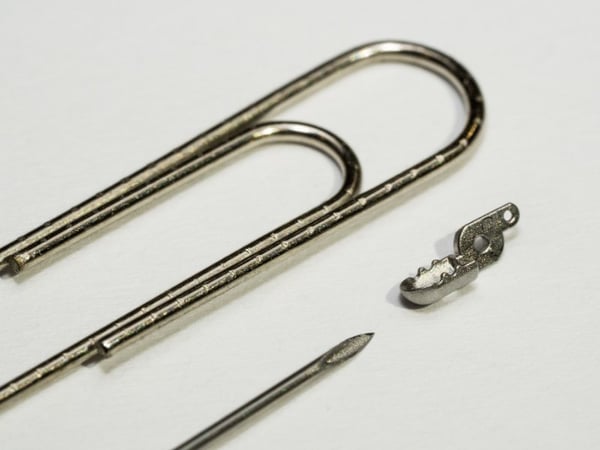
Clevis beside a paper clip
Stainless steel · micro component
The same clevis next to a paper clip and a needle tip. The everyday objects carry the scale; the part carries the geometry.
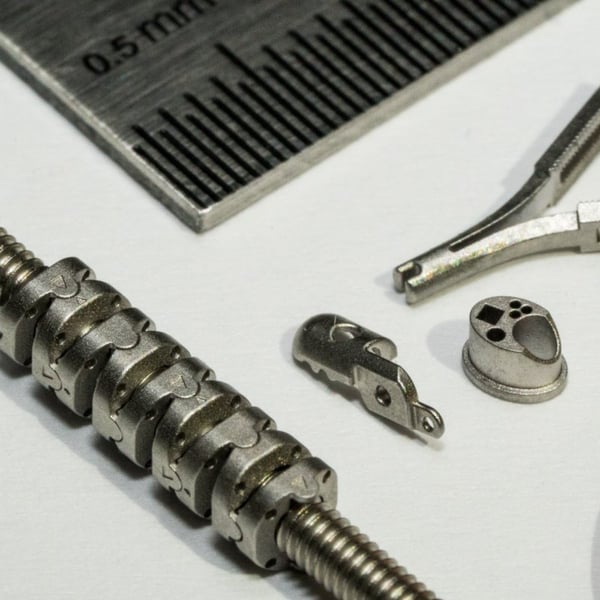
Five-part family
Stainless steel · micro component
Lattice screw, clevis, multi-lumen tip and a jaw pair against a 0.5 mm rule. Five different geometries from one process, shown together at the same scale.